

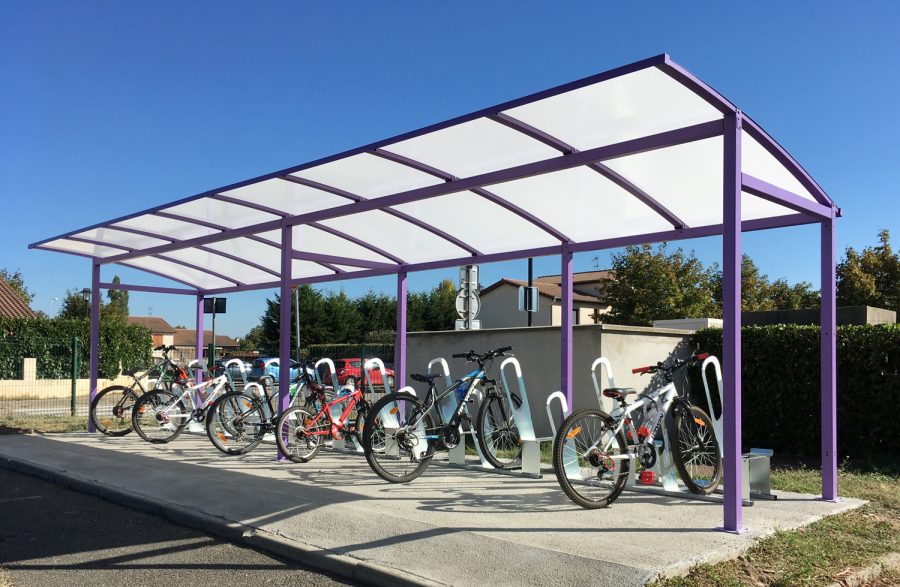
Cycling facilities for schools play a vital role in promoting active travel. By providing suitable parking solutions, primary and secondary schools can make it easier for pupils, families and teaching staff to travel by bike.
Commuting between home and school is indeed a major challenge for local authorities and schools. Every day, large numbers of pupils, parents, teachers and staff travel to schools.
In this context, developing cycling infrastructure is a practical way of promoting active travel and supporting the transition to more sustainable travel.
Installing suitable cycling facilities helps to meet a key need: providing accessible, well-organised parking spaces that are suited to everyday use.
Why should cycling be encouraged in schools?
Cycling is a particularly suitable mode of transport for everyday journeys. For journeys between home and school, it can help reduce reliance on private cars and encourage more active ways of getting around.
Encouraging cycling from a young age also helps to develop new travel habits. Consequently, for local authorities and schools alike, putting in place suitable infrastructure is therefore essential to making cycling easier and more accessible.
Active travel helps, in particular, to:
- to reduce the number of car journeys made on short routes;
- to encourage daily physical activity;
- to improve the quality of the areas surrounding educational establishments;
- support local sustainable transport policies;
- to raise awareness among younger generations of alternative modes of transport.
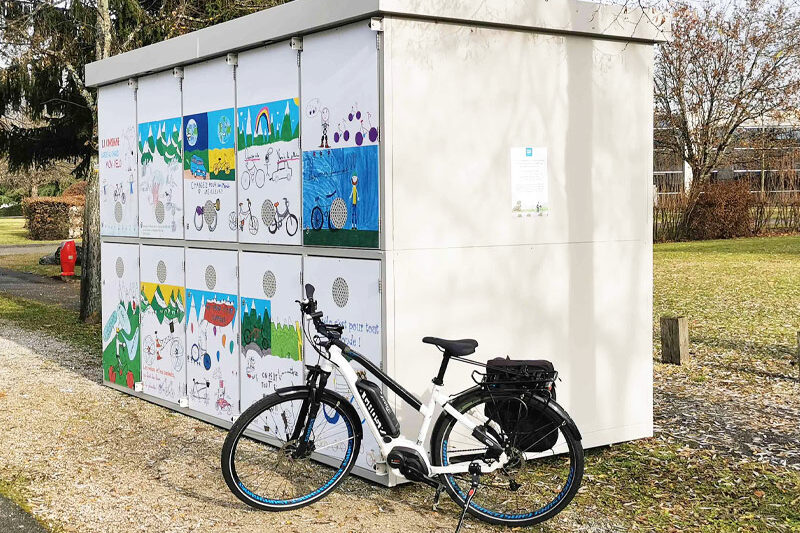
Bicycle parking: an essential piece of infrastructure
Encouraging pupils and teaching staff to cycle to school requires providing them with suitable facilities.
A school can therefore incorporate various types of suitable solutions:
to protect bicycles from the elements
for parking and securing bicycles
Dedicated areas
which are clearly identified and visible
for maintaining and repairing bicycles
Cycle parking should not be regarded as merely an ancillary facility. It constitutes a genuine part of the transport infrastructure, just like the other facilities required for everyday travel.
What cycling facilities should be installed in a school?
The choice of equipment depends on several factors: the number of pupils and staff, the available floor space, the number of visitors to the site and the intended uses.
Bicycle shelters
Bicycle shelters help to create a clearly designated parking area that is accessible and tailored to the needs of schools. Depending on the level of protection and security required, you can choose between an open bicycle shelter and a secure bicycle shelter.
They can be installed in school playgrounds, near entrances or in easily accessible outdoor areas. Their size can be adapted to accommodate the number of bicycles.
ALTAO® Curve cycle shelters help to organise outdoor spaces, protect bicycles from the elements and encourage their everyday use.
For schools, a cycle shelter can help to:
- organise outdoor spaces;
- to protect bicycles from rain and bad weather;
- improve the visibility of cycle parking;
- to encourage the everyday use of bicycles.
Parking hoops and racks
Bicycle racks and stands complete the installation, allowing bikes to be parked in an organised manner and secured using a suitable fixing point.
ALTAO® Parco cycle racks enable efficient organisation of cycle parking and optimisation of available space.
The number of facilities depends on the desired capacity and the needs of the establishment. A project may therefore combine several cycle shelters and different types of parking facilities.
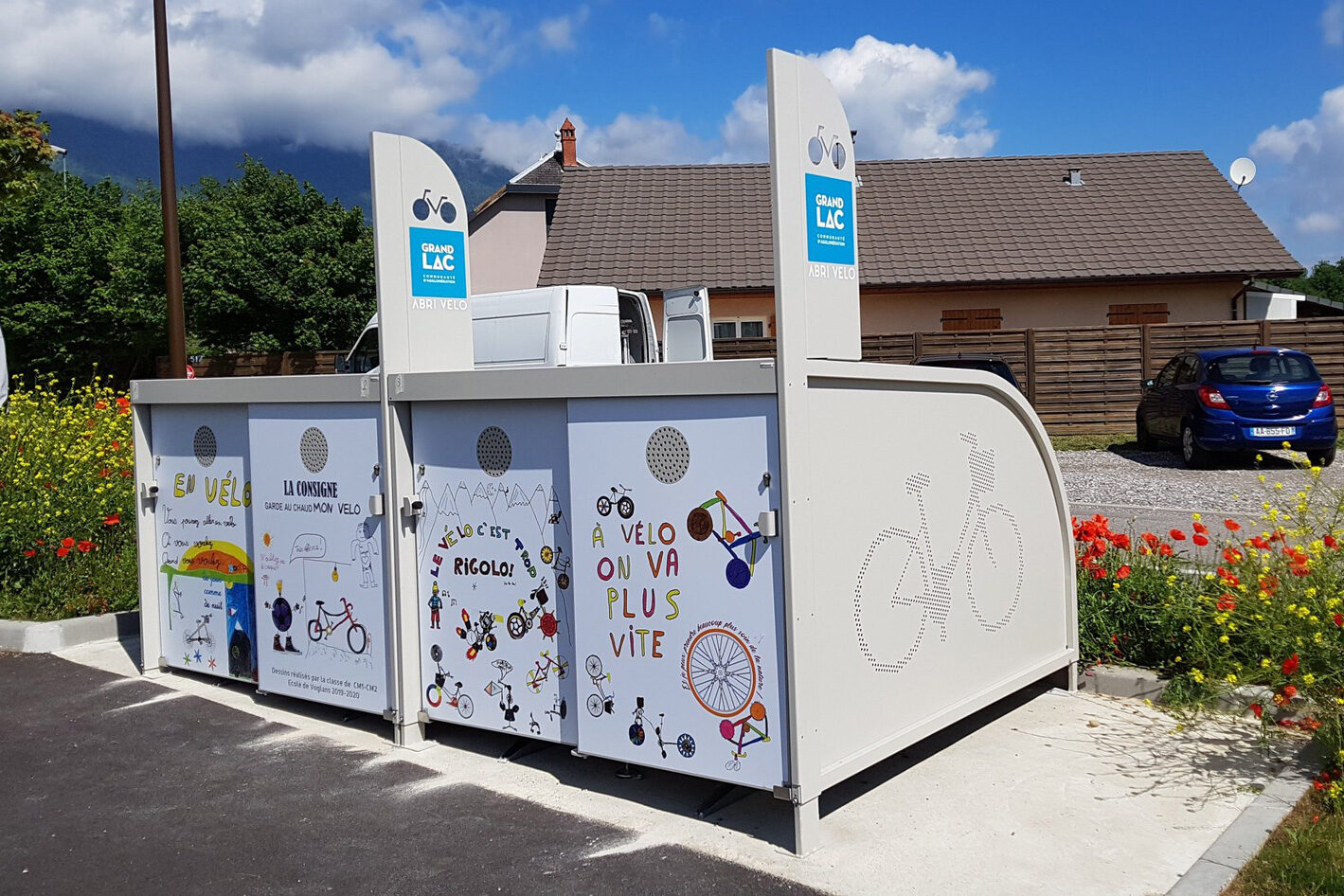
At Anne Frank Secondary School in Saint-Just-Saint-Rambert, a new covered cycle parking area has been fitted with 46 ALTAO® Parco racks, providing several dozen spaces for pupils. Find out more about this cycle parking project at the secondary school in Saint-Just-Saint-Rambert.
Equipment suitable for both primary and secondary schools
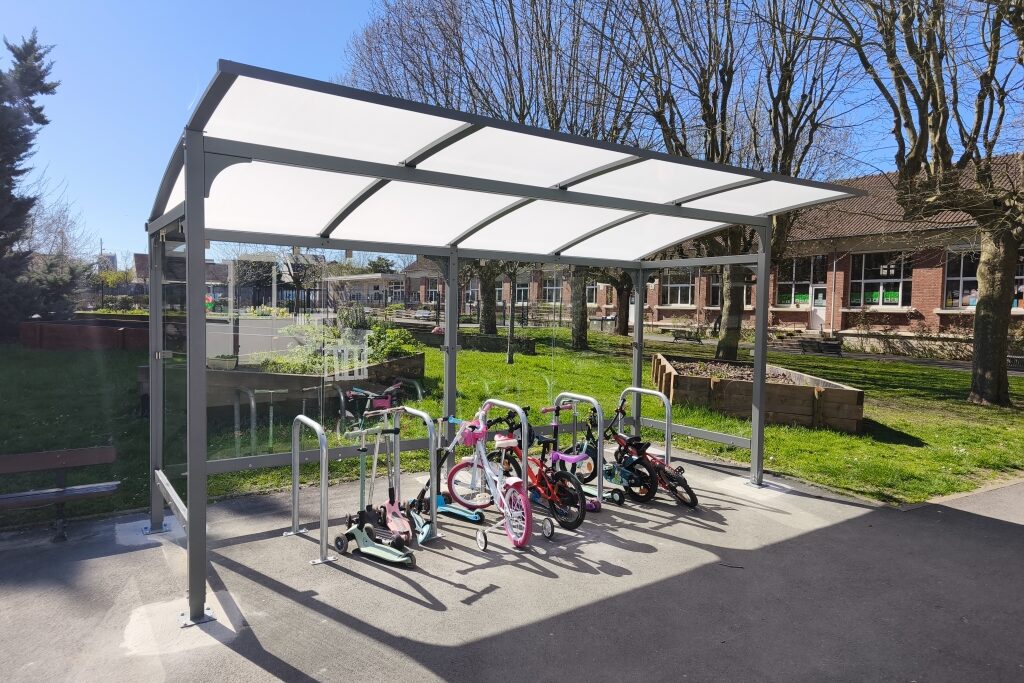
Requirements vary depending on the type of school and the pupils or students it caters for. A primary school, a lower secondary school, an upper secondary school or a higher education institution do not necessarily face the same constraints in terms of use, capacity or layout.
Projects carried out in various institutions thus demonstrate the diversity of possible solutions.
At Jean Monnet Secondary School in Saint-Jorioz, Haute-Savoie, the project comprises 7 bespoke ALTAO® Open cycle shelters, 216 cycle spaces on ALTAO® Parco racks and 30 spaces for scooters, making a total of 246 spaces. This project demonstrates how infrastructure can be designed to meet the specific needs of a school. Find out more about the cycle shelters installed at the secondary school in Saint-Jorioz.
The project also demonstrates that a school layout can accommodate a range of uses and different types of vehicles, in order to support the travel patterns of pupils and staff.
Additional equipment: maintaining and repairing your bike
Encouraging cycling is not just about providing cycle parking spaces.
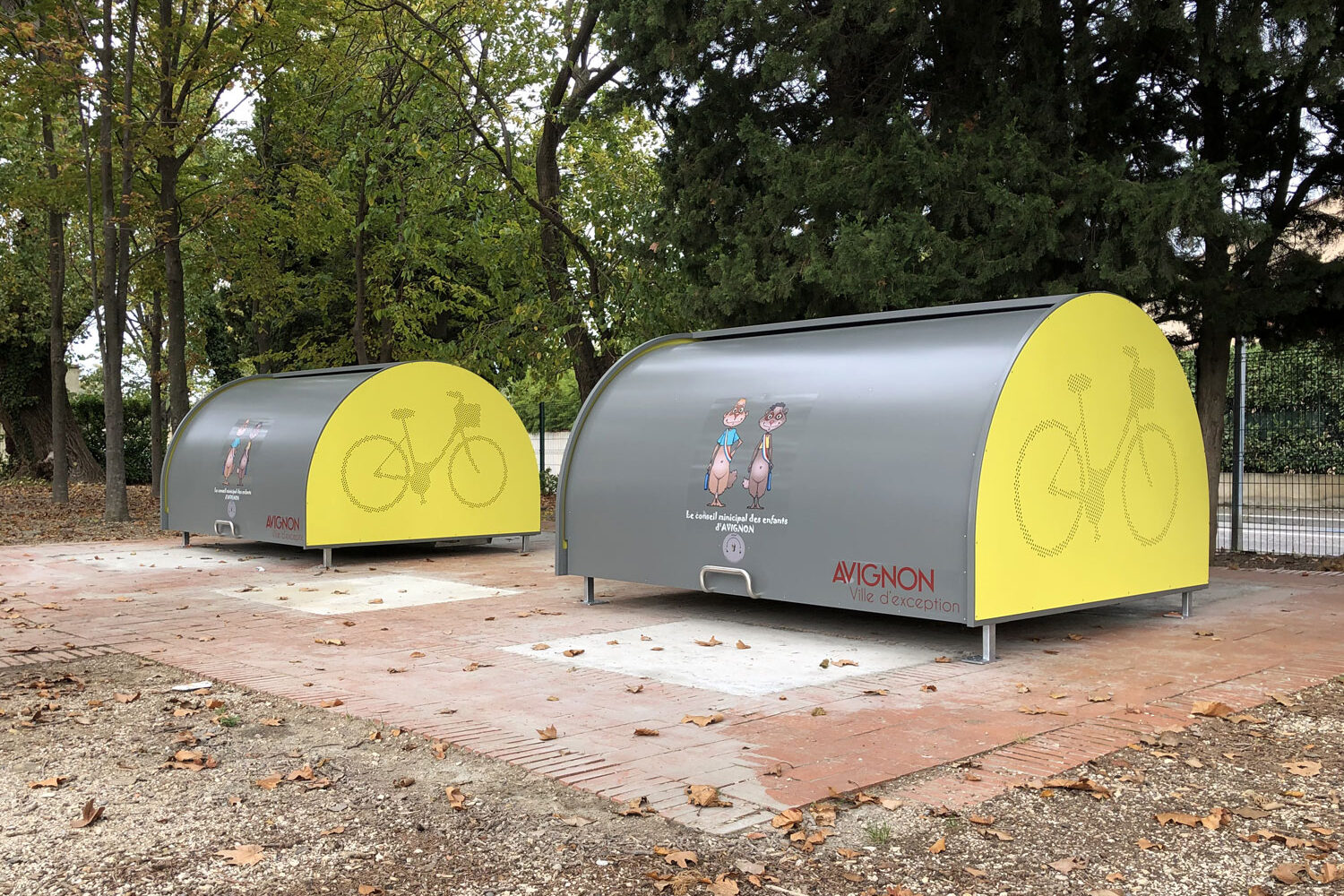
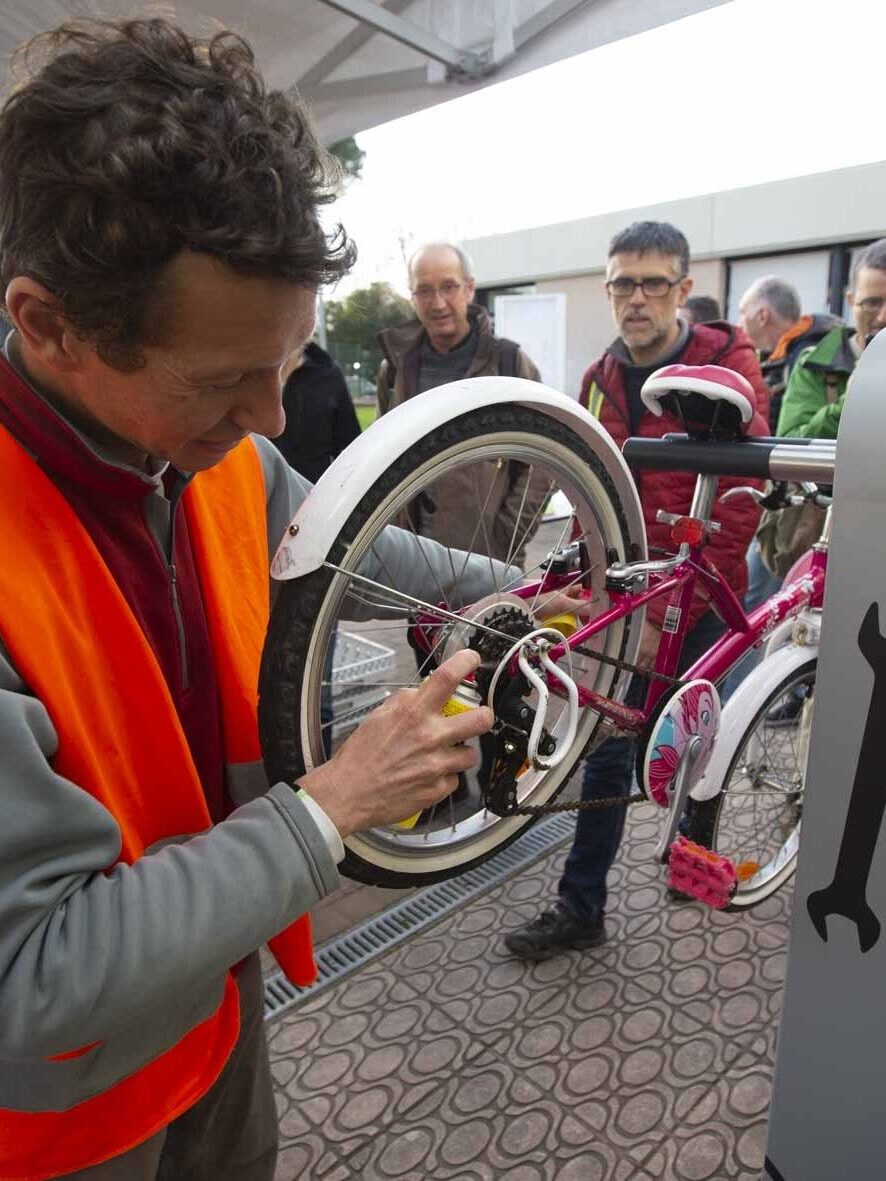
To make cycling easier in everyday life, establishments can also provide bike repair and pump facilities, repair stations or secure parking facilities.
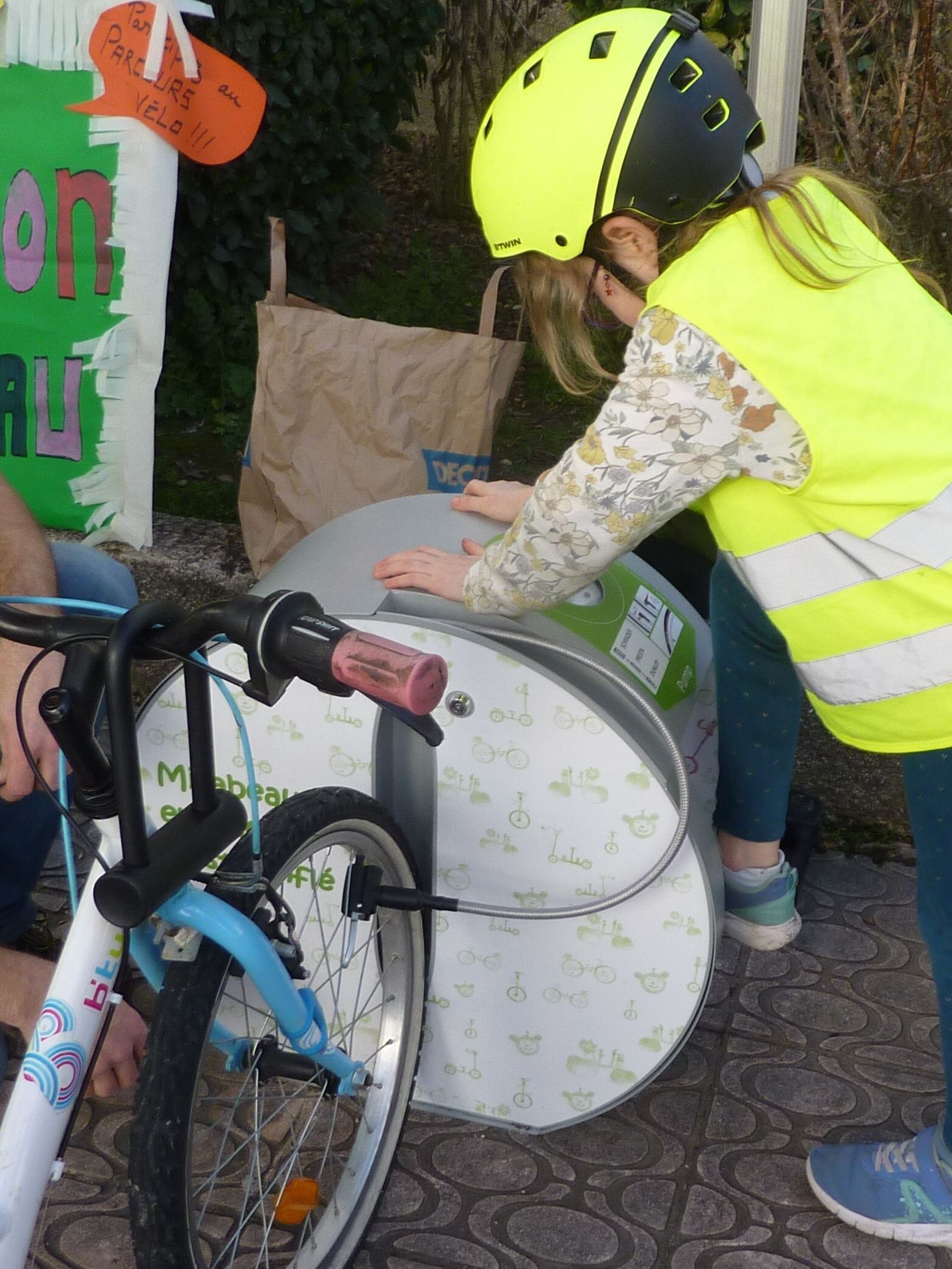
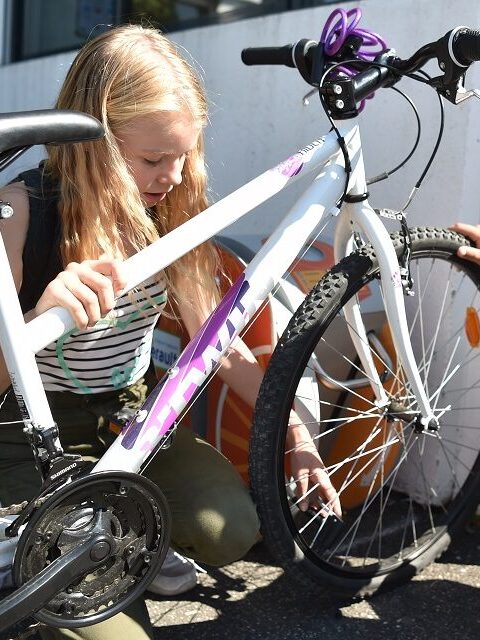
The project ‘Cycling facilities for and by children!’ showcases several examples of facilities designed to encourage cycling from a very young age.
In particular, schools and colleges have been fitted with tyre-inflation stations, repair points and secure parking facilities. This equipment can also be customised or incorporated into educational projects, to encourage pupils to take ownership of the facilities.
Designing a cycle park suitable for school use
Effective cycling kit should be easily accessible and intuitive.
There are several factors that need to be taken into account when designing the project.
1. Location
The location of the cycle parking facility is crucial. It must be easily accessible from the building’s entrances, whilst ensuring that pedestrian flows are well organised.
2. Capacity
The number of spaces must be tailored to current needs, whilst anticipating the growth in cycling.
3. Safety
The facilities must allow bicycles to be secured conveniently and help to minimise the risk of damage or theft.
4. Protection
In the case of a covered shelter, bicycles are protected from the elements, which makes them more convenient to use on a day-to-day basis.
5. Integration into the environment
Bicycle parking facilities must blend in harmoniously with the surroundings of the premises and with the public or private spaces surrounding them.
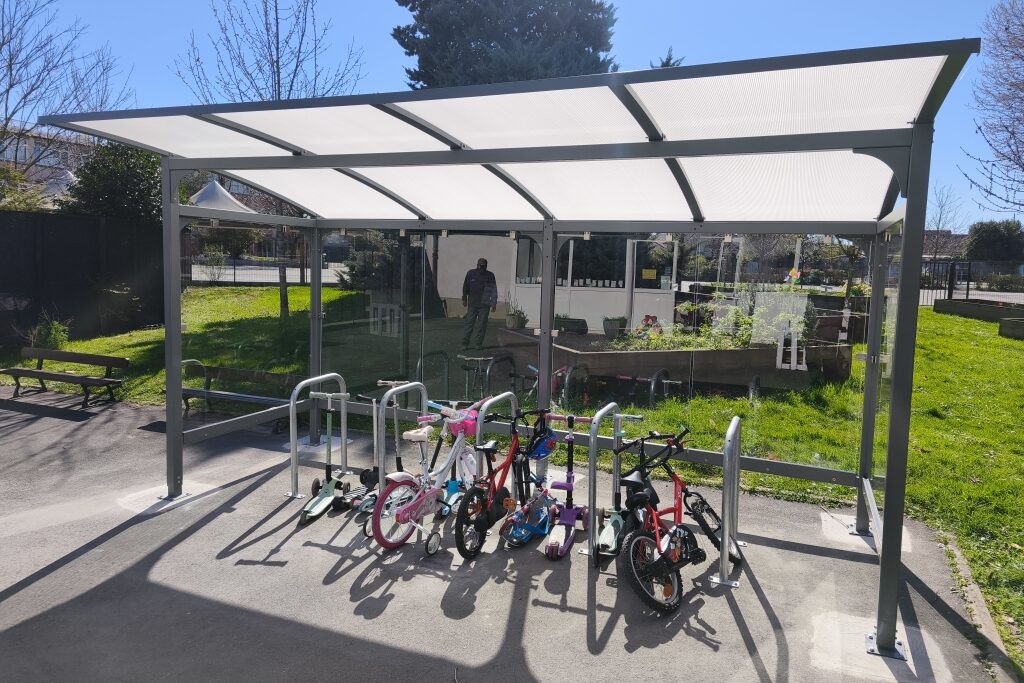
Example: 15 cycle shelters installed at schools in Noisy-le-Grand
Example: 15 cycle shelters installed at schools in Noisy-le-Grand
In Noisy-le-Grand, 15 ALTAO® Curve cycle shelters have been installed at several schools to support the development of active travel.
The project comprises:
- 12 bicycle shelters, each 4.2 m long;
- 3 bicycle shelters, each 8.4 m long;
- 110 U-shaped hoops.
This project provides a practical example of how cycle parking facilities can be rolled out across several schools to make cycling easier and support journeys between home and school.
Take a look at the project: 15 cycle shelters for schools in Noisy-le-Grand.
Encouraging cycling through the provision of suitable facilities
To promote active travel, it is essential to create the conditions that make it easier for people to adopt these modes of transport.
In schools, the installation of suitable cycle parking facilities is a practical and visible measure. It helps to support those who already cycle to school and gradually encourages new habits.
Projects carried out in primary and secondary schools show that there are many ways to set up a cycling facility: a covered shelter, bike racks, bike hoops, a tyre-inflation station, a repair point or secure parking.
Bicycle shelters, bike racks and complementary solutions thus help to make cycling a genuine transport option for journeys to school.
🚲 Would you like to install cycling facilities at your school?
Altinnova supports you with your cycle facilities and parking schemes, offering solutions tailored to the needs of schools and local authorities.